
Four floors we have built together. Data gave facts, insights gave meaning, assets gave cash flow, and knowledge, in the previous chapter, gave the library a memory and a voice: you can ask it questions, and it answers.
And we ended that chapter with a distinction that is, in truth, the limit of everything built so far: the library answers. What happens after the answer, it leaves to us.
Back in the first chapter of this thesis, when I first presented the layers, I wrote that a fifth layer was emerging above them, and that I believed it would be the future. Time to make good on that note.
The gap between an answer and an outcome
Let's look honestly at what happens on the day after the perfect answer.
You asked the library "which customer objections came up this year across all the webinars?" and got an excellent answer: seven objections, mapped, with the responses given to each one. Now what? Now someone has to turn that into a document for sales. Cut the relevant clips. Send each salesperson what applies to their territory. Update it after the next webinar. And again after that.
The answer took five seconds. The follow-through takes a week of work competing for the attention of busy people. And in that competition, the follow-through usually loses: the perfect answer stays in the chat, and the value that was almost realized goes back to sleep in the library.
This is the gap the action layer closes. Instead of "where are the moments that fit sponsor X?", it is "find every moment that fits sponsor X, package them into a kit, and send it." Instead of "what was said about AI this year?", it is "build a presentation from everything said about AI this year." Instead of working out which clip belongs to which speaker, it is "send each speaker their clips."
The difference is not in the phrasing. It is in who holds the task after the sentence ends.
From the advisor to the portfolio manager
In the language of this series, that difference is familiar, because the world of investing has lived it for decades.
An investment advisor answers questions: what is worth buying, what is the risk, where things stand. However smart the advisor, execution stays with you. You have to call, instruct, follow up. And what happens in practice? Exactly what happens to the perfect answer in the chat: life pushes, the instruction gets postponed, the opportunity passes.
A portfolio manager works differently. He does not wait for your call. He acts within a mandate you defined: the investment policy, the risk level, the boundaries. The dividend gets reinvested without anyone picking up a phone. Rebalancing happens when it is needed, not when someone remembers. And when something falls outside the mandate, then, and only then, he comes back to you for a decision.
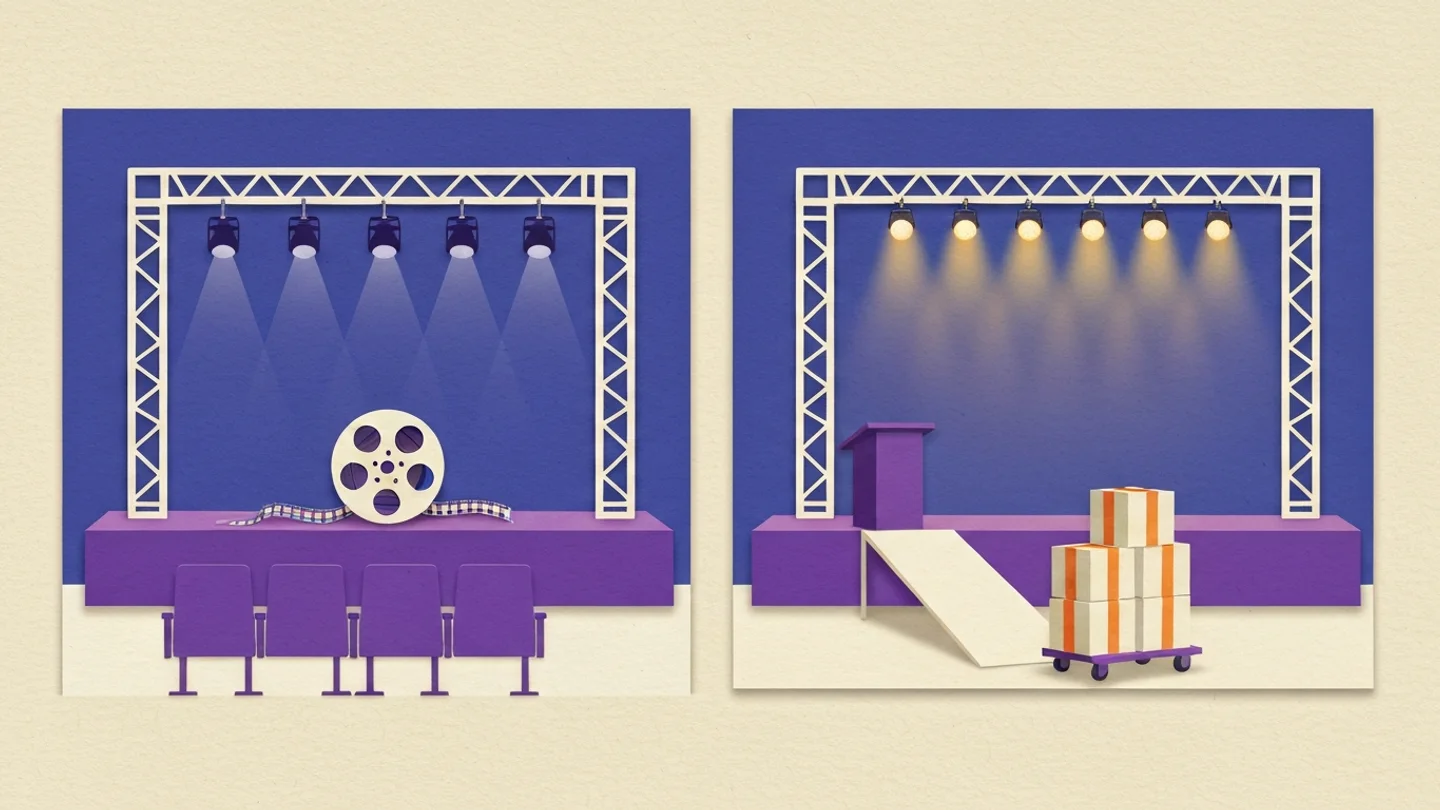
The action layer is that transition, applied to the content portfolio. The speaker kits go out the day after the conference, not "when someone gets a minute." The objections document updates after every webinar, not at the annual refresh. And when a dormant topic returns to the headlines, remember rebalancing from the stock chapter? The relevant panel from the archive is already sitting on marketing's desk that same morning, packaged and ready, at precisely the moment it is worth the most. Timing is everything, and timing is exactly what manual execution always misses.
"Hold on. Who keeps their hands on the wheel?"
I can hear the objection, and it is legitimate: no marketing lead wants content leaving the organization without a human eye, and no CEO wants to discover after the fact what went out in their name.
But notice that the world of investing solved precisely this problem, and not by giving up on execution. By inventing the mandate. The portfolio manager does not do "whatever he feels like." He operates inside a framework the client set, with clear boundaries and points that require approval.

That is exactly what a mature action layer looks like: the organization writes the mandate. Which actions run automatically (speaker kits after every event), which queue for approval (anything going out to customers), and which require a human from the first moment. And remember the Content Asset Manager from the chapter on the missing role? Here is precisely their job in this world: not to perform the actions, but to write the mandate, supervise the exceptions, and steer the machine. Technology does not make ownership obsolete. It finally gives ownership levers.
And here the whole pyramid converges on a single point: what allows the machine to act without breaking things? The fact that it stands on four verified floors. An action on unattributed data will send a speaker somebody else's clip. An action without an insights layer will distribute the wrong moments. The action layer is not a shortcut around the pyramid. It is the reward for building it correctly.
The flywheel
And there is one more thing that happens when execution stops being the bottleneck, and it may be the most important of all.
Every move we have counted in this series, the dozens of dividends from an hour of a panel, the perfectly timed rebalancing, the institutional memory that answers in seconds, was always economical. It simply did not happen, because between the idea and the execution stood a price: human hours, coordination, attention. We saw it in the assets chapter. The cost of search is what decided that organizations produce 4 and not 40.
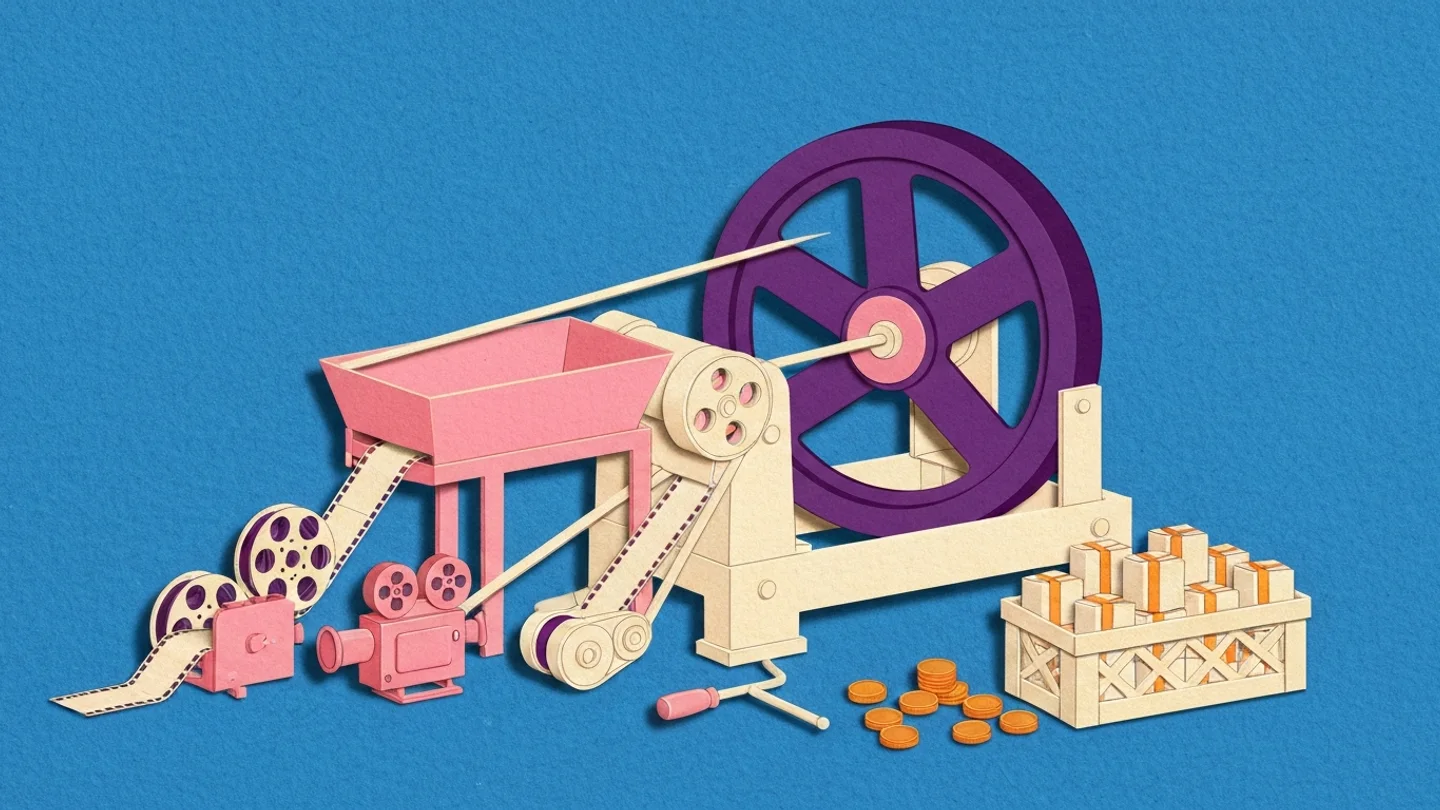
The action layer does to execution what the data layer did to search: drives its price toward zero. And when the price of execution collapses, every plan that was shelved because "we do not have the hands" comes back to the table. The flywheel starts to turn: every event feeds the library, the library feeds actions, the actions produce value that justifies the next event. Video goes in one side. Value comes out, without friction, on the other.
This is why I wrote back in the first chapter that this layer would be the future. Not because it is the most sophisticated. Because it is the one that turns everything else from effort into a mechanism.
The bottom line of the entire series
Five floors, and really one claim rolling through them: video is not a product. It is an asset. And like any asset, its value is set by what you do with it: examine it (data), understand it (insights), collect from it (assets), compound with it (knowledge), and finally, put it to work for you (action).

Every time a camera turns on somewhere in the world, a new stock is issued. I wrote that in the first chapter and I return to it now, because after five floors the question can finally be stated in full: not just who will know how to distill that value, but who will build the mechanism that distills it without getting tired.
That is the pyramid we are building at Speechbox, floor by floor. And if this series has done its job, you already know exactly which floor your organization is on, and what awaits it on the next one.

Founder and CEO of Speechbox, a platform that turns enterprise video into an active knowledge asset.
Questions this raises
Because the answer takes five seconds and the follow-through takes a week of work, competing for the attention of busy people, and in that competition the follow-through usually loses. The perfect answer stays in the chat and the value that was almost realized goes back to sleep in the library.
It changes who holds the task once the sentence ends. Not "where are the moments that fit sponsor X" but find them, package them into a kit, and send it. Not "what was said about AI this year" but build the presentation from it. Execution moves from the person to the system.
Through a mandate, the way a portfolio manager acts inside boundaries the client set rather than waiting to be called. The organization writes which actions run automatically, which queue for approval, and which need a human from the first moment. Autonomy is not the absence of control, it is control defined in advance.
Four verified floors beneath it. An action taken on unattributed data will send a speaker somebody else’s clip, and an action without an insights layer will distribute the wrong moments. The action layer is not a shortcut around the pyramid, it is the reward for having built it correctly.