
For seven years now, I have been having the same argument. First, I was told that technology simply could not replace the content processing work humans do. Then I was told the quality would never match human output. Then came the claim that machines could never deliver both scale and quality.
Meanwhile, reality has moved in exactly the opposite direction, and the data proves it.
The flood is already here
Video stopped being "just another content type" a long time ago. It has become the internet itself. According to Cisco figures cited in recent industry reviews, video accounts for roughly 82.5% of all global internet traffic, and the average viewer now consumes about 118 minutes of online video every single day: nearly two hours, every day, for every person. These are numbers that are hard to wrap your head around, but their meaning is simple. Video is no longer a format. It is the language the internet speaks.
On the production side, the numbers are just as staggering. More than 500 hours of video are uploaded to YouTube every minute. That is over 720,000 hours a day, or 82 years' worth of new content every 24 hours. The upload rate has grown 80 fold in less than two decades, from 6 hours per minute in 2007 to 500 and up today. And that is just YouTube. Add conferences, webinars, recorded sales calls, internal training sessions, interviews, and panels, and you get the full picture: production has won. Processing has been left behind.
The problem: the organization's biggest asset is also its least utilized
Video is the most extreme example of what analysts call unstructured data. Let's pause for a moment on the distinction. Structured data is information that lives in orderly tables. Rows and columns that a system knows how to read, sort, and search: sales figures in a CRM, records in a database, numbers in a spreadsheet.
Unstructured data is everything else. Information with no fixed template, which is why traditional systems simply do not know what to do with it.
According to Gartner and IDC estimates, roughly 90% of enterprise information is unstructured, files, recordings, presentations, and video, and it is growing three times faster than structured data.
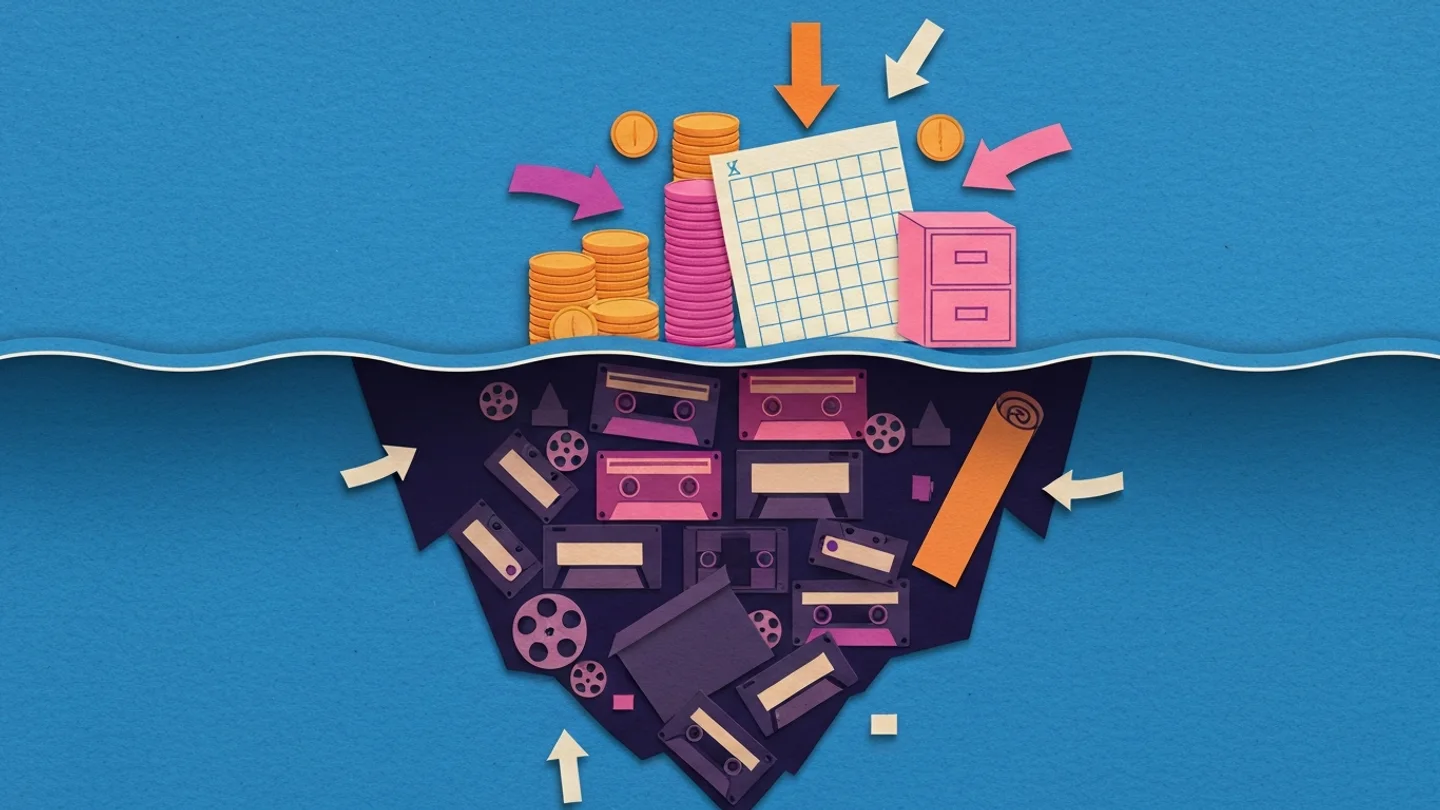
Now for the troubling part. According to IDC, only about 10% of this information is even stored, and even less of it is ever analyzed. And an IDC study sponsored by Box found a strange inversion in budgets: even though 90% of the data is unstructured, most of an organization's technology investment goes to the structured minority.
In other words, organizations pour a fortune into producing video, and then shelve it like a dead archive. Not because they do not want to use it. Because technically, every minute of video holds thousands of possible uses, and no human team can keep up with the volume. And the deeper truth is this: it is not just a capacity problem, it is a strategy problem. We still do not really know how much value can be squeezed out of every minute of that content.
The solution: breaking video down into layers
When you look at video not as a file but as a repository, you discover it contains an entire story, in four layers.

- The data layerWhat do we see? Who are the speakers? What are their roles? What are their claims? Facial expressions, body language, context.
- The insights layerThe central ideas, the recurring arguments, the quotes worth remembering, the story the video tells.
- The assets layerClips, articles, LinkedIn posts, newsletters, landing pages, a VOD library, speaker kits, sales and PR materials, and an internal knowledge base. And here the economics are clear: every one of these is produced from footage that has already been paid for.
- The knowledge layerThis is where the real shift happens. Once video is broken down and understood, you can talk to it. "Where did the CEO discuss AI?" "What objections came up at the conference?" "Which message repeated across all the panels?" Video stops being an archive and becomes a knowledge base you can search, converse with, and base decisions on.
And above these, a fifth layer is emerging, one I believe is the future.
- The action layerNot just finding answers, but turning knowledge into a flywheel and executing the next step. "Build a presentation from everything said about AI this year." "Send each speaker their clips." "Find every moment that fits sponsor X."
The bottom line: video is an asset
And here is the realization that changes everything.
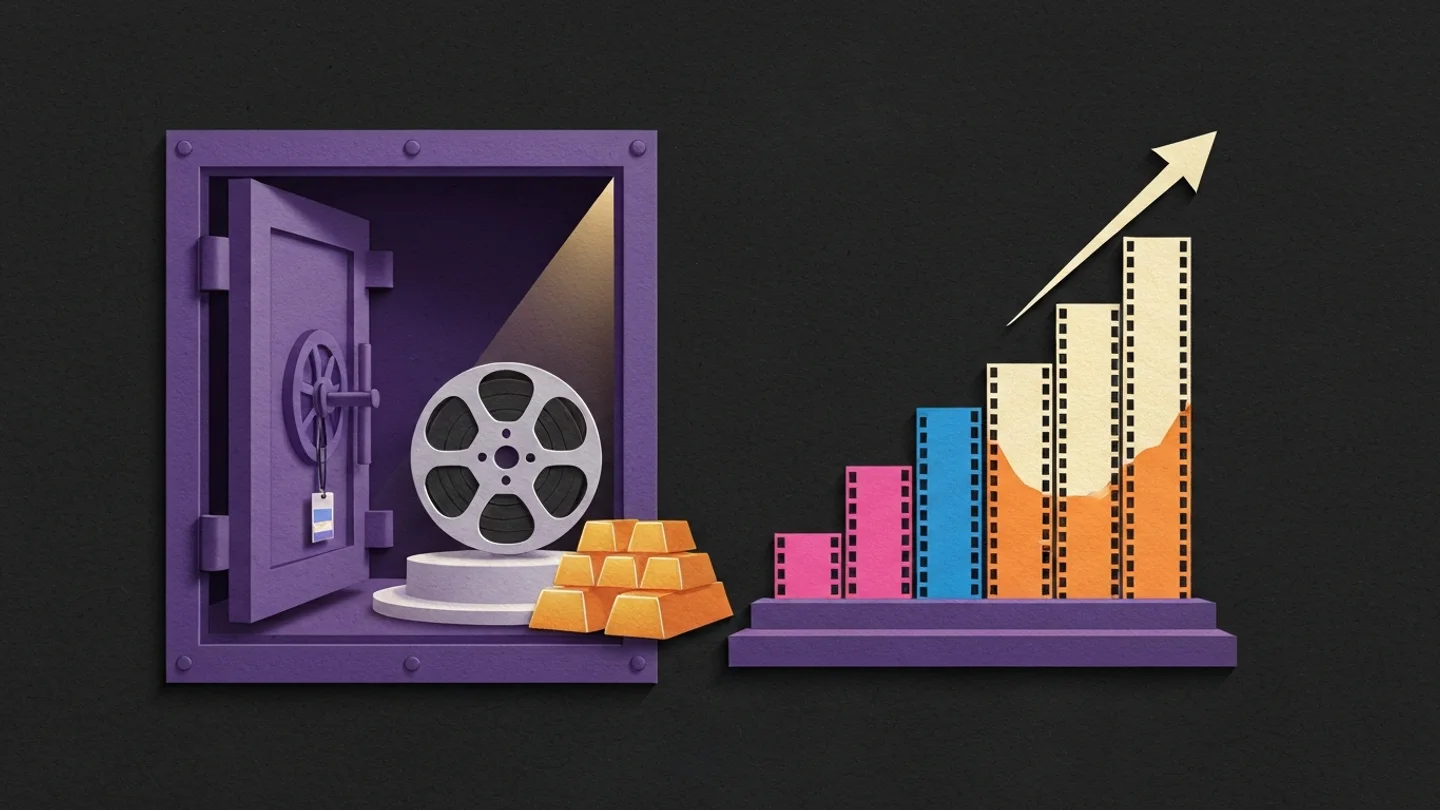
Treating video content as something with value that can be priced and appraised, just like a stock, a patent, or intellectual property, is a profound shift in mindset. And the market is already voting with its feet. The AI powered video analytics market is projected to nearly triple by 2031, growing at about 23% a year. The data exists, the demand exists, the technology exists, and the economics of reusing what has already been produced are plain.
What most organizations are missing is simply the understanding that the hard part, creating the content, is already behind them.
This is exactly the insight that gave birth to Speechbox: a system built like one giant data center that takes video, breaks it down to its components, and enriches everyone who needs something from it (spoiler: that is nearly every department in the company). Only when that wall comes down can we finally talk about a return on all the resources it took to create the content in the first place. The expertise of distilling and realizing that potential? That is us.
Every time a camera turns on somewhere in the world, someone becomes worth more. The only question is who will know how to distill that value, and who will leave it buried in the archive.

Founder and CEO of Speechbox, a platform that turns enterprise video into an active knowledge asset.
Sources
- DemandSage, Video Marketing Statistics 2026. Video at roughly 82.5% of internet traffic.
- Statista, Hours of video uploaded to YouTube every minute. 500 hours per minute.
- AnythingCounter, YouTube upload volume 2026. 720,000 hours per day.
- Research World, Possibilities and limitations of unstructured data. 80 to 90% unstructured, only about 10% stored.
- Box and IDC, Untapped Value white paper. The investment gap in unstructured data.
- Searchlab, Video Marketing Statistics 2026. 93% report positive ROI, 118 minutes of daily viewing.
- Mordor Intelligence, AI Video Analytics Market. USD 6.19 billion in 2026 to USD 17.23 billion in 2031, a compound annual growth rate of 22.72%.
Questions this raises
It means production is the beginning of the process, not the end of it. Treating the shoot as the finish line leaves the value in the file. The material is what gets broken down afterwards, and everything an organization actually uses is derived from that breakdown.
Roughly 90% of enterprise information is unstructured, and by IDC’s estimate only about 10% of it is ever stored, with even less analyzed. An IDC study sponsored by Box found the inversion that follows from it: most technology investment goes to the structured minority.
Data: who spoke, what was said, when, and in what context. Insights: the central ideas, the recurring arguments, the story. Assets: clips, articles, posts, kits, a VOD library. Knowledge: a library you can question rather than search. And above them the action layer, where knowledge turns into executed work.
Structured data lives in rows and columns a system can read, sort and search. Video has no fixed template, so traditional systems do not know what to do with it, and it is growing about three times faster than structured data.