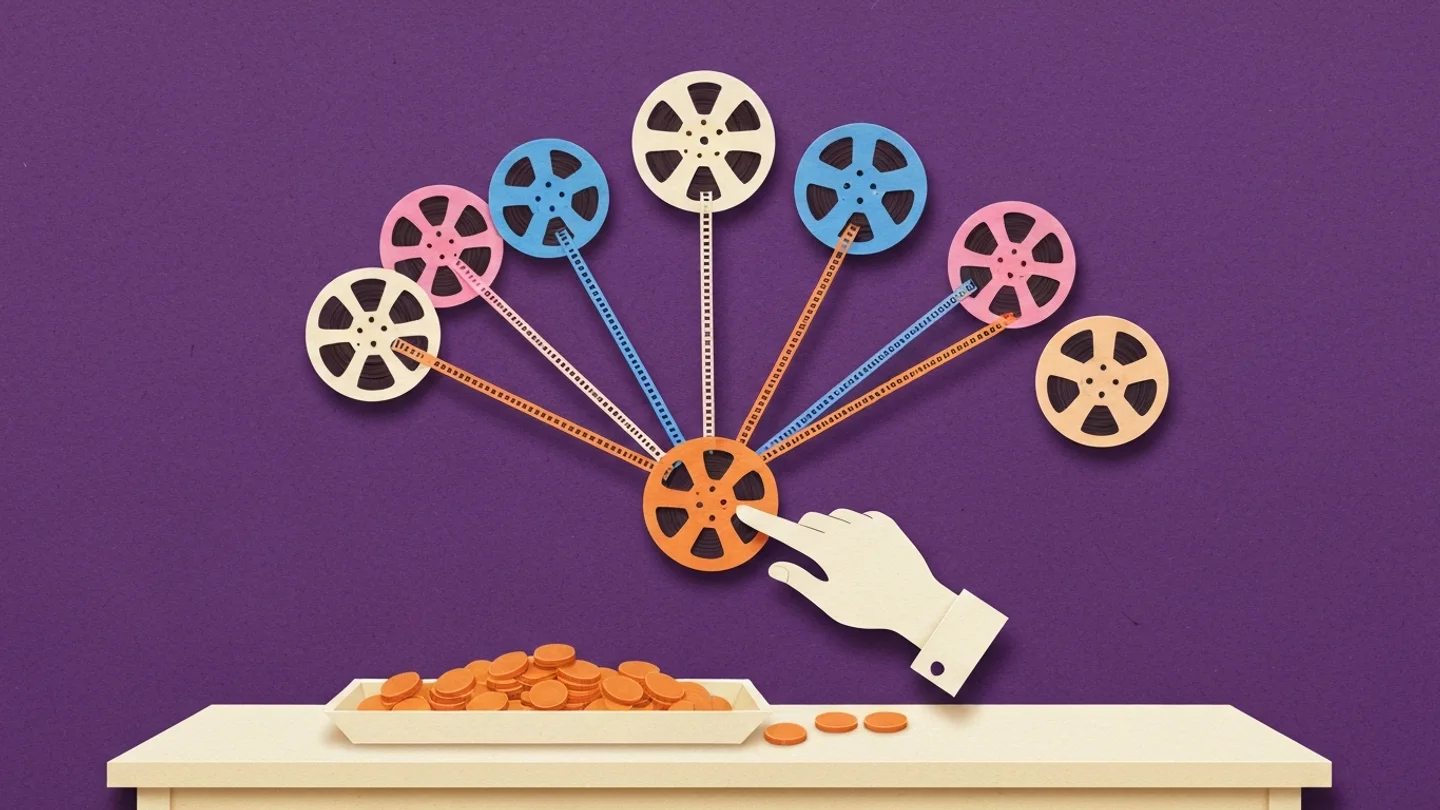
Three floors behind us. The data layer gave facts, the insights layer gave meaning, and the assets layer, in the previous chapter, finally gave money: dozens of dividends from a single hour of video.
We could stop here and be satisfied. Most organizations that reach the third floor will be years ahead of the market. But notice what all three floors share: they work on one video at a time. Break down a panel, analyze a panel, extract from a panel.
The fourth floor breaks that frame. And that break is, in my view, the biggest economic leap in the entire pyramid.
From dividend to compound interest
In investing, the difference between profit and wealth is not the size of the return. It is its structure. A dividend is linear profit: the asset pays, paid, done, will pay again. Nice, predictable, bounded. Compound interest is a different animal: the profit joins the principal, and the enlarged principal earns on itself. Value does not add up. It multiplies.
Now translate to a video library. Ten broken-down events, each standing alone, that is ten dividend-paying assets. Linear: the eleventh event adds a tenth.
But the moment the events are connected, sitting on the same data layer, speaking the same language of speakers, topics, and claims, something else happens. The eleventh event does not just add itself. It adds ten new connections: what it confirms from what was said before, what it contradicts, what is new.
That is the precise definition of compound interest.
In the insights chapter we caught a glimpse of this: the cross-cutting patterns, the message that repeated across speakers who never coordinated. The knowledge layer takes the glimpse and turns it into infrastructure.
From an archive that stores to a library that answers
What does this mean in practice? That your relationship with the library changes at the root: you stop pulling files out of it and start asking it questions.
"Where did the CEO discuss AI?" is the first level, search, and we met it back at the data layer. But the knowledge layer answers questions of a different kind, ones that have no single timestamp:
- "How did our position on regulation shift between the 2024 conference and this year's?"A question whose answer is scattered across two events and six speakers, and that no employee would assemble without a week of work.
- "Which customer objections came up this year across all the webinars, and what did we answer to each one?"A question worth gold to sales, whose answer is buried across dozens of hours.
- "What have we promised from stages over the past three years?"A question legal and brand teams would love to ask, and until now had no one to ask.
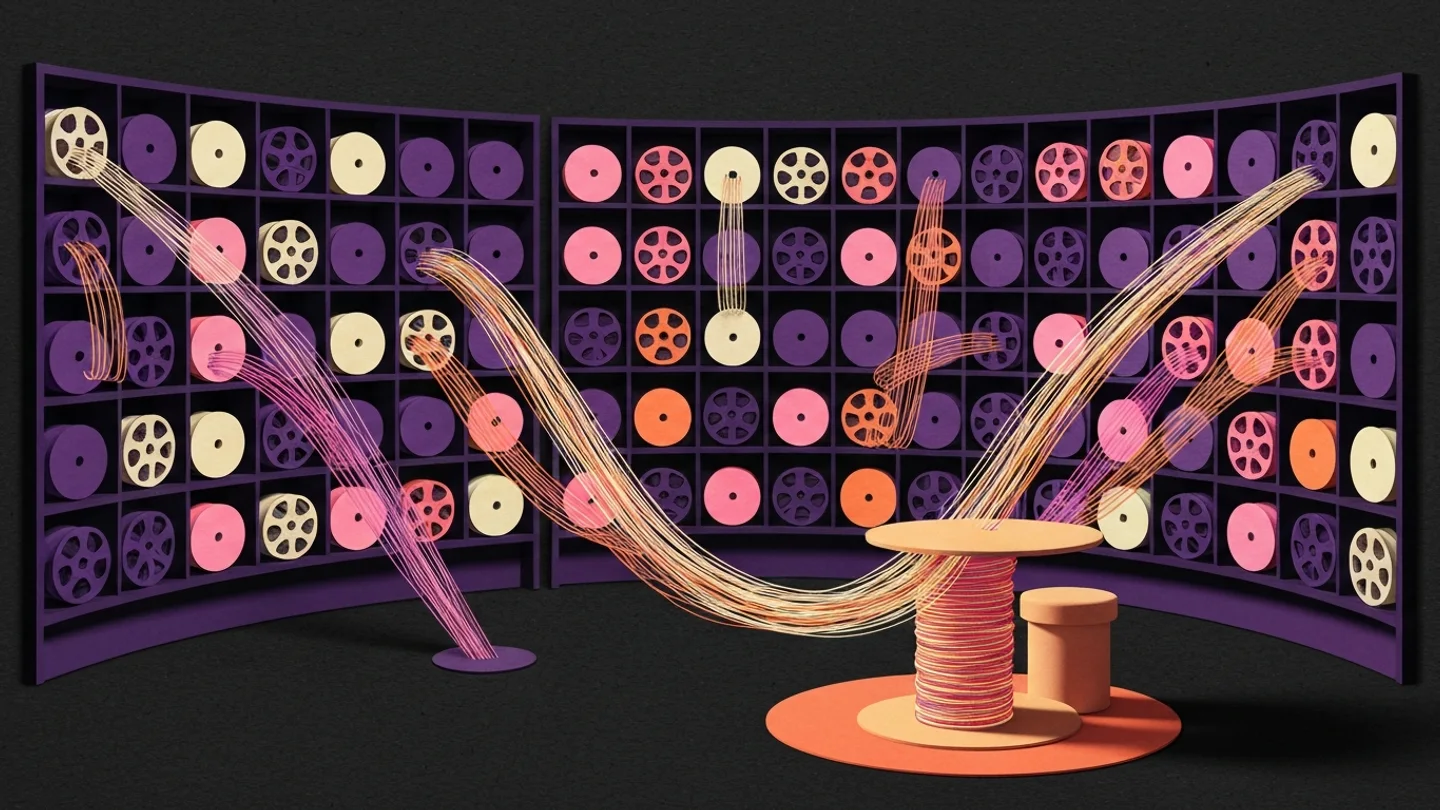
Notice what these questions share: none of them is about video. They are all about the organization: what it thinks, what it has said, how it has changed. And that is the essential shift of the fourth floor. The library stops being a collection of recordings and becomes the company's institutional memory. Not a metaphor. Memory in the operational sense: one place that knows what was said, by whom, and what it adds up to.
The asset that gets stronger when people leave
Here I want to return to a point I touched on in the data layer chapter, because on this floor it takes on its full weight. Today, the knowledge of "what has been said here" lives in people's heads. The marketing manager who attended every conference. The veteran salesperson who remembers what that customer shared on stage. They are the organization's human search engines, and every departure of theirs is an archive deletion.

An organization with a knowledge layer lives in the opposite reality: institutional memory does not depend on any single head. The new employee asks the library what once required a decade of tenure. And this leads to a subtle financial insight: an asset whose value depends on a specific person trades at a discount. Any appraiser will tell you this about a business that depends on its owner. The knowledge layer removes that discount from the content portfolio. The value moves from the people to the asset, and stays.
Why now, specifically
Compound interest requires two things: principal and time. And here lies the strongest argument for starting today rather than "once we get organized."
The principal already exists. It is the entire archive you have accumulated. But the figure from the first chapter still hangs over us: only about 10% of unstructured information is even stored. Every year that passes without a knowledge layer is not a neutral year. It is a year in which the principal erodes. Events that were never broken down get forgotten, recordings get lost, context evaporates along with the people.
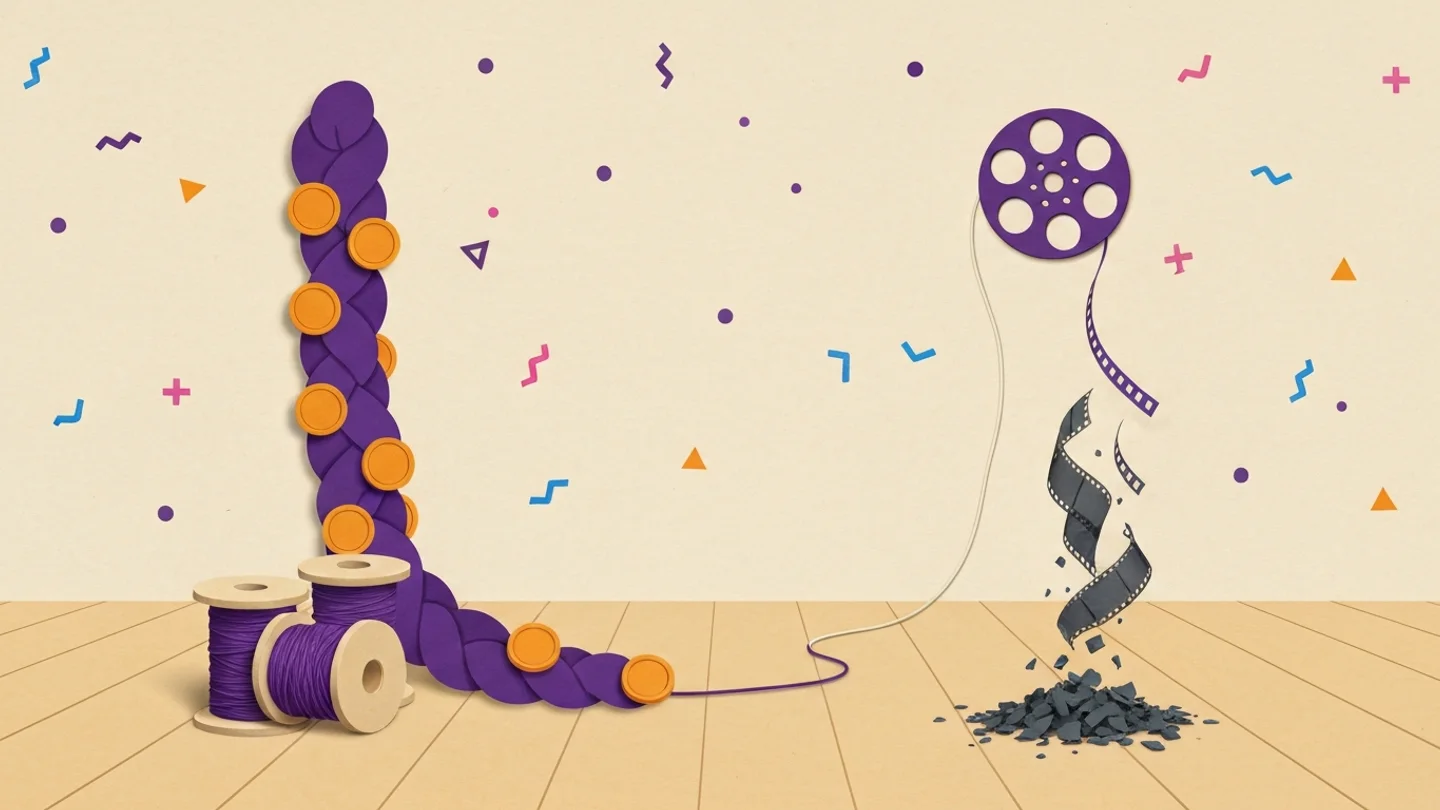
And on the other side, whoever starts now enjoys the flip side of the same equation: every quarter of broken-down content that joins the library increases the value of everything that comes after it. Two identical organizations that start two years apart will not be two years apart, because the distance between them compounds. That is the simple, brutal arithmetic of the fourth floor: it is the only floor in the pyramid whose value depends not only on what you do, but on when you started.
The bottom line
The knowledge layer is the moment the portfolio stops being a collection of stocks and becomes a genuinely managed portfolio. One whose parts work together, whose value accumulates, and that you can question instead of rummage through.
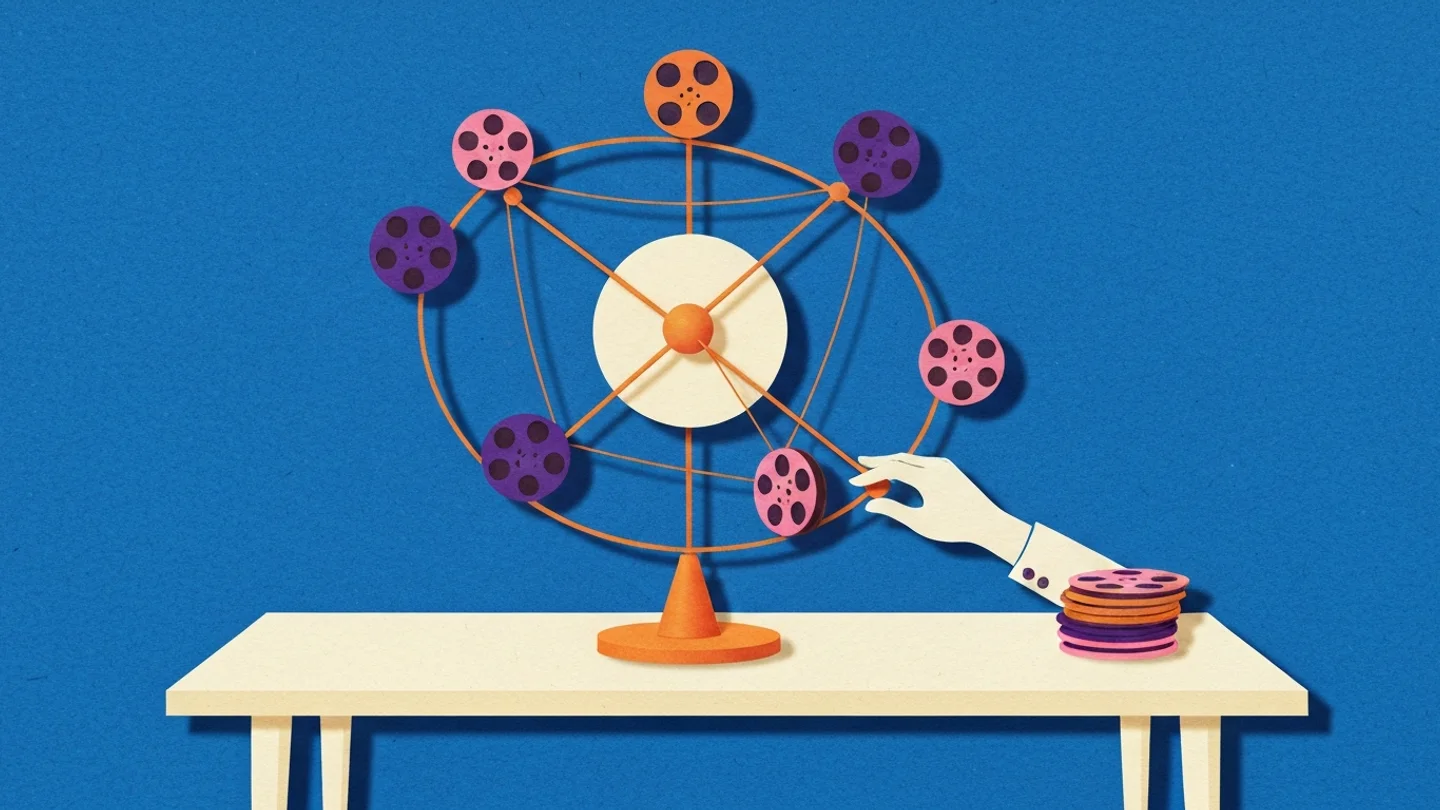
And yet even this floor stops at a particular point: it answers. Smart, fast, compounding, but it answers. The next question, "fine, so do something with it," it leaves to the humans.
Next time we climb to the top floor, the one I promised back in the first chapter of the series: the moment the library stops just answering and starts executing.
Next chapter: the action layer. From the advisor who answers to the portfolio manager who acts.

Founder and CEO of Speechbox, a platform that turns enterprise video into an active knowledge asset.
Sources
- Research World, Possibilities and limitations of unstructured data. Only about 10% of unstructured information is stored, and less is analyzed.
- Box and IDC, Untapped Value white paper. The gap between what organizations accumulate and what they can ever use.
Questions this raises
A dividend is linear: the asset pays, and the eleventh event adds a tenth to ten standing alone. Compound interest is structural: once the events sit on the same data layer, the eleventh does not just add itself, it adds ten new connections to what came before. Every new recording improves the entire library that preceded it.
Questions with no single timestamp. How our position on regulation shifted between two conferences. Which customer objections came up across every webinar this year and what was answered to each. What the organization has promised from stages over three years. None of these is a question about video. They are questions about the organization.
Today it leaves with them, because the knowledge of what was said lives in the heads of the manager who attended every conference and the salesperson who remembers what the customer shared on stage. Any appraiser will tell you an asset that depends on one person trades at a discount. A knowledge layer removes that discount from the content portfolio.
Because compounding needs principal and time, so the year you start is itself part of the return. The principal is the archive you already have, and it erodes: events that were never broken down get forgotten, recordings get lost, context evaporates with the people. Two identical organizations that start two years apart will not stay two years apart.